Rojava and the Kurdish Fight for Democracy: An Analysis of Betrayal and Resilience
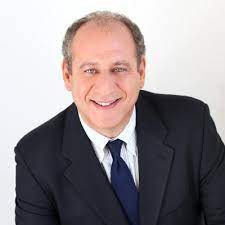
Remarks by: DAVID L. PHILLIPS
Academic Visitor, St. Anthony’s College, Oxford Univetsity
The Kurdish Studies Conference, London School of Economics
May 1, 2026
Rojava is more than a geographic reference. It is a way of life marked by grass-roots democracy, women’s rights, and environmental sustainability. As a concept, it is relevant beyond Syria’s borders. The world has much to learn from Rojava’s example. An after-action analysis requires a steely eyed assessment of what happened in North and East Syria leading to the spectacular defeat of the Syrian Democratic Forces (SDF) and the collapse of its plans for democratic federalism in Kurdish regions of Syria and across the region.
US Betrayal
Kurds joined the Global Coalition Against Deash in 2014. Ninety partners, including the Kurds, signed on to the mission aimed at degrading and destroying Daesh. The Kurds did not insist on guarantees from the US in return for their participation. The Kurds trusted Washington’s good will. However, the US never viewed the Kurds as allies. They were merely “good fighters” who joined the coalition because it was in their interest.
The Islamic State (IS) advanced on Mosul and Tal Afar in June of 2014, threatening religious communities — Assyrians, Chaldeans, Syriac Christians and Yazidis.Theywere given the option to convert, pay taxes (jizya), leave, or be killed. By August 2014, ISIS took control over Shabak and Turkmen villages in the Nineveh plains, resulting in mass displacement, abduction, killings and forced conversions. The European Parliament unanimously passed a resolution declaring that IS has committed genocide against ethnic and religious minority groups in February 2016.
The overthrow of Bashar al-Assad by Islamist fighters was led by Ahmed Hussein al-Sharaa, known by his nom de guerre, Abu Mohammad al-Julani.Julani was a terrorist rebel commander who served as the emir of the Al Nura Front from 2012 to 2017 and the emir of Hayat Tahrir al- Sham from 2017 to 2025. He may have trimmed his beard and put on a business suit, but he cannot wash hands of terrorist attacks in he was involved. With US air support, Daesh was defeated in 2019. Kurds paid a huge price for their participation in the Global Coalition against Daesh. About 11,000 Kurds died and 20,000 were seriously injured.
Many Kurds feel betrayed by the US, which withdrew its security assistance in December 2025. Kurds were attacked by Islamist fighters from Turkey and the Syrian Armed Forces in January 2026. More than 1,000 Kurdish fighters were killed and 80% of territory in the Autonomous Area of North and East Syria (AANES) was ceded to the Arab tribes, jihadis and the Syrian Armed Forces. It’s another chapter in the betrayal of Kurds by the United States.
Integration Agreement
Kurdish commander of the Syrian Democratic Forces (SDF), Mazloum Abdi, negotiated an integration agreement with Syria’s Acting President al-Sharra on March 11, 2025. The agreement envisaged equal representation for minorities and integration of the SDF’s military and civilian structures into the new Syrian state, including control over border posts as well as oil and gas in the Kurdish northeast.
However, the SDF delayed executing the agreement, hoping for a better deal. It insisted that Damascus accept political decentralization as a precondition to implementation. Mazloum said, “The integration of our forces must take place within a comprehensive political agreement that recognizes decentralization and the rights of the components of North and East Syria.”
Al-Sharra demanded integration of all civil and military institutions affiliated with the AANES into the framework of the Syrian state. He asserted, “Administrative decentralization depends on the unity and centrality of constitutional and political authority. This system can support genuine integration, as it allows for the distribution of administrative powers between the central government and local administrative bodies.” Damascus made many commitments still unfulfilled.
At about the same time as the integration agreement, the PKK announced a decision to disarm, demobilize and reintegrate its fighters after decades resisting Turkish domination. On May 22, 2025, Erdogan suggested that the PKK’s decision to disband also extended to affiliated groups in Syria. He rejected political decentralization in Syria, which he believed risked opening the door to similar demands in Turkey. He scoffed at Mazloum Abdi’s demand for political decentralization in Syria, which would transform the country from a unitary state. April 27, 2025, Mazloum insisted, “The PKK’s call to disarm concerns them alone and does not apply to our forces.”
Other minorities in Syria grew increasingly restive. In March 2025, militias affiliated with the armed forces launched attacks in the northwest that resulted in the death of at least 1,426 people. Syrian Alawites called for a referendum on self-determination, autonomy, and a peacekeeping mission in the coastal region following action against Alawites and Druze. About one thousand Druze we also killed in April.
Kurdish Unity
Disunity has always been the Achilles heel of the Kurdish community. Kurds are divided by ethnicity, culture, and ideology in four countries Kurds reside – Turkey, Syria, Iraq and Iran. Kurds have long deliberated a Kurdish conference to develop a unified position on relations with Middle East countries. Tension existed between Masoud Barzani’s focus on centralized government and Ocalan’s preference for power-sharing and decentralization. Rojava offered an opportunity to unify these conflicting goals.
A Kurdish Unity Conference was convenedin Qamishlo on April 26, 2025 by the Kurdish National Council in Syria (KNCS) and the Democratic Union Party (PYD). The conference adopted a joint Kurdish political vision, based on the principle of a united, democratic, and decentralized Syria with Kurdish national rights enshrined in the constitution. The initiative was supported by the United States and France, as well as Kurdish leaders, Barzani and Mazloum Abdi.
The conference recognized Syria as a multiethnic, multicultural, and multireligious state with decentralized governance ensuring fair distribution of power and wealth. It endorsed full constitutional equality between men and women and the recognition of the Kurdish language as an official language in Syria alongside Arabic, as well as the cultural and linguistic rights of other communities. Delegates called for reversing demographic engineering imposed by previous regimes and the safe return of displaced Kurds. It affirmed national unity based on justice and equal citizenship. The conference also reaffirmed that Kurdish unity is intrinsically linked to the unity of Syria and stressed Kurdish identity as a pillar of Syria sovereignty.
The conference contains key points concerning the rights of the Kurdish people – language, culture, identity and existence. It endorsed a unified Kurdish voice in negotiations with Damascus. The conference was not focused solely on political parties, but sought to involve various social components—women, youth, intellectuals, writers, and independent figures. Mazloum visited the Kurdistan Region of Iraq to meet Barzani and reiterate support for Kurdish unity.
Arab Tribes
Arab tribes like the Shammar, Baggara, and parts of the Aqeedat fought shoulder-to-shoulder with Kurdish forces against ISIS from 2015 to 2017. New frictions emerged as the war fronts cooled. Arab leaders accused the SDF of marginalizing them politically and economically, imposing ideologically charged school curricula, conscripting young men and boys, and monopolizing oil and wheat revenues.
A statement signed by 14 tribal leaders in July 2025 accused the SDF of “systematic oppression,” destabilization, and theft of resources. Addressed to the US government, the declaration called for an end to military and political support for the SDF. It demanded that Syria’s central government reassert sovereignty over the entire northeast. “The people have lived for years under repression, exclusion, and humiliation. Our tribes demand this declaration.” Arabs were paid by the AANES, but they did not share the view or values with their Kurdish neighbors.
The Shammar tribe, linked to the Deir ez-Zor Military Council, incorporated Arab fighters opposed Kurdish-led administration. Erdogan threatened military action if the SDF took steps to formalize autonomy or establish closer ties with the PKK. Many tribes insisted that on the full restoration of Syrian state authority. In April, tribal elites announced the creation of the “Council for Cooperation and Coordination in Jazira and the Euphrates,” aimed at unifying tribal voices against what they called SDF “hegemony.” In founding statements, council leaders vowed to reject any attempt by the SDF to claim representation of Arab communities in negotiations with Damascus or in international forums. The SDF turned a blind eye to the deep division with Arab tribes.
Foreign Representation
In retrospect, the need for a more effective lobby in the US and western capitals was urgent. Turkey lavished millions each year on well-connected Washington lobbying firms. The Turkish lobby focused on blocking Armenian genocide recognition. It invested in DC think-tanks like the Brookings Institution to oppose US sanctions because Turkey’s purchased the S-400 missile defense system from Russia.
Having failed politically, Turkey sought unsuccessfully to convince a US judge to dismiss charges against Erdogan’s security personnel who beat a group of Kurdish and Armenian protesters outside the White House in 2017. Turkey pressed the Trump administration to resolve its criminal prosecution of Turkish state-run lender Halkbank, convicted of colluding with Iran. Turkey sought the extradition of Fettullah Gulen on terrorism charges. Following the 2016 coup attempt, Erdogan blamed the Gülen movement, labeling the event a “gift from God” to justify a state purge. He arrested thousands of soldiers and judges, dismissed 150,000 government employees, and suspended over 20,000 educators. Turkey’s appeal found more resonance with the Trump administration.
Despite the prevalent view that the US betrayed Rojava, the Kurds believe that the US is still a better ally than Russia. The Kurds are clear-eyed about Turkey. A senior US official told me: “Given the choice, the US swill always chose Turkey.”
Democratic Federalism
Self-criticism starts with a critique of Murray Boochkin’s theories, which formed the ideological basis of the PKK and the Rojava revolution. Boochkin espoused libertarian principles, and values of equality, freedom and sustainability. He envisioned a society linked through self-governing institutions that are highly decentralized with the distribution of power to entities at the local level. Kurds in Rojava envisioned a system of self-government based on Boochkin’s ideas, which emphasized decentralization, ecological justice and gender parity in local administration. In March 2005, a year before Boochkin passed away, Ocalan issued the ‘‘Declaration of Democratic Confederalism in Kurdistan”, which called for grassroots ‘‘democracy without the state.’’ Boochkin viewed hierarchy as inherently oppressive. He believed that humans and nature are interconnected, and espoused sustainability as a central goal.
Boochkin’s romantic ideals had broad appeal to Oacalan and the PKK. However, the Rojava revolution proved impractical and premature. The demise of the Autonomous Administration in North and East Syria marked the end democratic confederation, or at least a delay in its realization.
Traditional elites and other elements of society in the Middle East have not yet evolved to embrace decentralization and grass-roots democracy. Nor have centralized regimes and autocracies successfully promoted social development and political pluralism.
On this occasion, May 1st — International Workers Day, the dignified struggle for worker’s rights is yet unrealized. Progressive government and federalism remain a bridge too far for Arabs and Turks.